Kettlebell Suitcase Carry
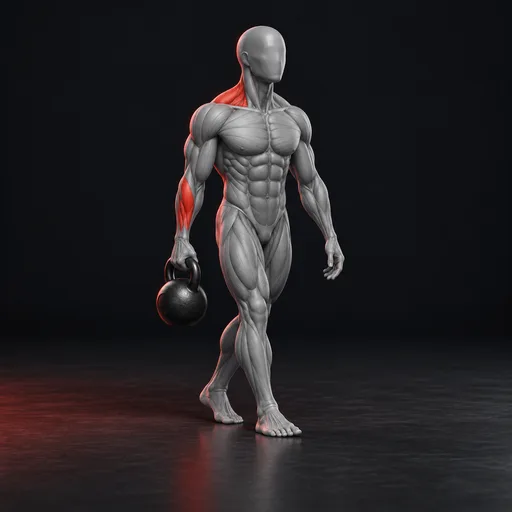
Kettlebell Suitcase Carry is a resistance exercise – loaded carry exercise involving Forearm grip muscles, Obliques, Trapezius. Use these steps to learn the movement and work with your coach to choose a suitable level.
Last updated: · DynPerformance
- Primary muscles
- Forearm grip muscles, Obliques, Trapezius
- Secondary muscles
- Gluteus medius, Gluteus maximus, Quadriceps, Erector spinae
- Exercise type
- Resistance exercise – loaded carry
Exercise technique
- Route
Choose a straight walking path and a safe place to set down the load.
- Grip
Hold the kettlebell securely in one hand and lift it by extending your hips and knees.
- Stand tall
Keep both shoulders level and stack your ribs above your pelvis.
- Brace
Tighten your abdomen without leaning toward or away from the weight.
- Walk
Take short, even steps, carrying the kettlebell beside you without striking your leg.
- Stop
Slow your steps and stop in full balance, keeping your wrist neutral.
- Switch sides
Bend your hips and knees to place the load on the floor, then walk the same distance with the other hand.
Key technique points
- Keep your shoulders level.
- Do not lean away from the weight.
- Use short steps.
- Do not strike your leg with the kettlebell.
- Use equal distances on both sides.
- Switch hands with the load on the floor.
Common mistakes
Leaning sideways
Do not counter the weight’s pull by leaning the other way; use your obliques to keep both shoulders level.
Shrugging the shoulder
Do not pull the working shoulder toward your ear; carry the weight with a neutral arm and supported torso.
Resting the bell against the leg
Do not press the bell into your thigh to reduce the grip demand; hold it freely and steadily beside you.
Taking long steps
Do not lengthen each step enough to make your hips drop sideways; choose a short, even rhythm.
Switching hands in the air
Do not pass the kettlebell to the other hand while walking; place it safely on the floor and establish your stance on the new side.
Bending the wrist
Do not carry the handle with your wrist bent backward; choose a grip and load that maintain forearm alignment.
Frequently asked questions
Kettlebell Suitcase Carry: why is “Leaning sideways” a mistake?
Do not counter the weight’s pull by leaning the other way; use your obliques to keep both shoulders level.
Kettlebell Suitcase Carry: why is “Shrugging the shoulder” a mistake?
Do not pull the working shoulder toward your ear; carry the weight with a neutral arm and supported torso.
Kettlebell Suitcase Carry: why is “Resting the bell against the leg” a mistake?
Do not press the bell into your thigh to reduce the grip demand; hold it freely and steadily beside you.
Kettlebell Suitcase Carry: why is “Taking long steps” a mistake?
Do not lengthen each step enough to make your hips drop sideways; choose a short, even rhythm.
Kettlebell Suitcase Carry: why is “Switching hands in the air” a mistake?
Do not pass the kettlebell to the other hand while walking; place it safely on the floor and establish your stance on the new side.
Kettlebell Suitcase Carry: why is “Bending the wrist” a mistake?
Do not carry the handle with your wrist bent backward; choose a grip and load that maintain forearm alignment.
What should I focus on when doing Kettlebell Suitcase Carry?
Keep your shoulders level. Do not lean away from the weight. Use short steps. Do not strike your leg with the kettlebell. Use equal distances on both sides. Switch hands with the load on the floor.
Related exercises
- Barbell Shrug
- Dumbbell Shrug
- Dumbbell Farmer's Carry
- Barbell Shrug Behind The Back
- Cable Shrugs
- Exercise Guide
Add this exercise to your program with your coach
If you have a health condition, consult a qualified professional.