Knee Push-up
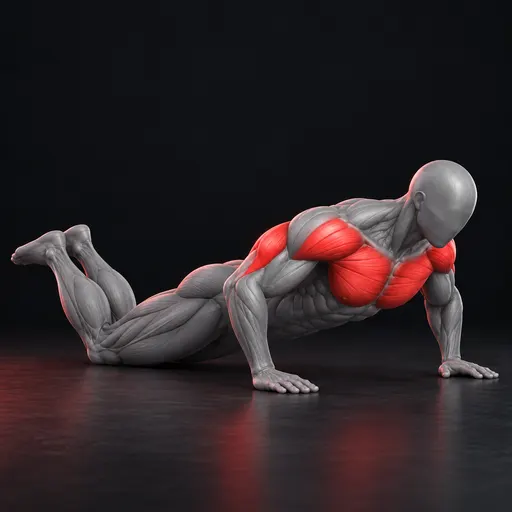
Knee Push-up is a bodyweight exercise - closed-chain press exercise involving Pectoralis major, Triceps brachii. Use these steps to learn the movement and work with your coach to choose a suitable level.
Last updated: · DynPerformance
- Primary muscles
- Pectoralis major, Triceps brachii
- Secondary muscles
- Anterior deltoid, Serratus anterior, Rectus abdominis, Gluteus maximus
- Exercise type
- Bodyweight exercise - closed-chain press
Exercise technique
- Knee support
Place a thin, nonslip mat beneath your knees.
- Hands
Place your palms slightly wider than your shoulders and spread your fingers comfortably.
- Body line
Form a straight line from knees through hips to head; do not draw your hips toward your heels.
- Abdominal control
Keep your ribs over your pelvis and prevent your lower back from sagging.
- Lower slowly
Bend your elbows diagonally backward to bring your chest toward the floor.
- Rise together
Exhale as you push the floor away, raising your chest and hips together.
- Top balance
Keep your knees as a fixed pivot while extending your arms with control, then begin the next repetition.
Key technique points
- Maintain a straight knee-to-head line.
- Do not bring your hips toward your heels.
- Lower your chest between your hands.
- Cushion your knees.
- Do not flare your elbows far from your torso.
- Do not assist by swinging your feet.
Common mistakes
Pulling the hips backward
Do not move your hips toward your heels as you lower; this reduces arm loading and breaks the push-up line.
Arching the lower back
Do not let your abdomen drop toward the floor; stabilize your abdominals and hips together despite the knee support.
Lowering the head
Do not bring only your face toward the floor while your chest stays high; move your head and torso at the same speed.
Pressing the knees onto a hard floor
Do not load your kneecaps on a bare hard surface; distribute contact pressure with a thin support.
Flaring the elbows fully
Do not spread your upper arms sideways at shoulder height; lower your chest with a comfortable diagonal elbow bend.
Swinging the feet
Do not rapidly swing your lower legs to assist the ascent; maintain the knee pivot and body line.
Frequently asked questions
Knee Push-up: why is “Pulling the hips backward” a mistake?
Do not move your hips toward your heels as you lower; this reduces arm loading and breaks the push-up line.
Knee Push-up: why is “Arching the lower back” a mistake?
Do not let your abdomen drop toward the floor; stabilize your abdominals and hips together despite the knee support.
Knee Push-up: why is “Lowering the head” a mistake?
Do not bring only your face toward the floor while your chest stays high; move your head and torso at the same speed.
Knee Push-up: why is “Pressing the knees onto a hard floor” a mistake?
Do not load your kneecaps on a bare hard surface; distribute contact pressure with a thin support.
Knee Push-up: why is “Flaring the elbows fully” a mistake?
Do not spread your upper arms sideways at shoulder height; lower your chest with a comfortable diagonal elbow bend.
Knee Push-up: why is “Swinging the feet” a mistake?
Do not rapidly swing your lower legs to assist the ascent; maintain the knee pivot and body line.
What should I focus on when doing Knee Push-up?
Maintain a straight knee-to-head line. Do not bring your hips toward your heels. Lower your chest between your hands. Cushion your knees. Do not flare your elbows far from your torso. Do not assist by swinging your feet.
Related exercises
Add this exercise to your program with your coach
If you have a health condition, consult a qualified professional.