45-degree Back Extension
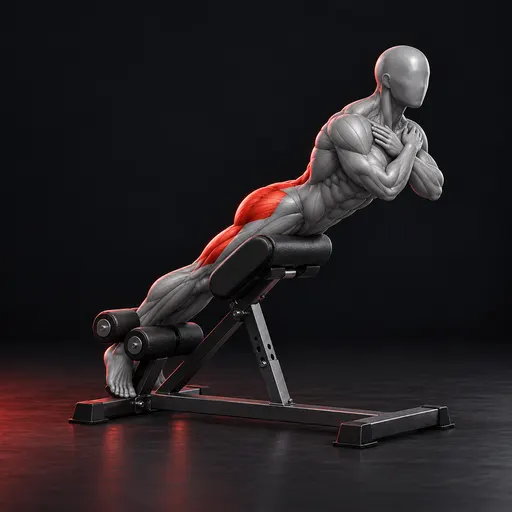
45-degree Back Extension is a strength – resistance exercise exercise involving Gluteus maximus, Hamstrings. Use these steps to learn the movement and work with your coach to choose a suitable level.
Last updated: · DynPerformance
- Primary muscles
- Gluteus maximus, Hamstrings
- Secondary muscles
- Erector spinae, Adductor magnus
- Exercise type
- Strength – resistance exercise
Exercise technique
- Pad
Set the pad below your hip crease.
- Feet
Secure your heels against the rear support.
- Trunk
Keep your head in line with your spine.
- Lower
Hinge at your hips to lower your torso.
- Depth
Stop where you can still keep your lower back from rounding.
- Rise
Squeeze your glutes to bring your torso in line with your legs.
- Finish
Stop rising when your body forms a straight line.
Key technique points
- Do not place the pad against your abdomen.
- Move through your hip joints.
- Keep your ankles against the support.
- Do not arch backward through your lower back at the top.
- Keep your arms crossed over your chest.
- Monitor hamstring tension as you lower.
Common mistakes
Pad too high
Covering the hip crease shifts the movement to your lower back.
Rising too far
Going beyond the line of your legs increases lower-back extension.
Lifting the head
Looking at the ceiling unnecessarily strains your neck.
Dropping to the bottom
An uncontrolled descent suddenly increases hamstring tension.
Bending and straightening the knees
Driving the repetition from your knees changes the hip-extension movement.
Relaxing the feet
Losing contact with the support disrupts torso stability.
Frequently asked questions
45-degree Back Extension: why is “Pad too high” a mistake?
Covering the hip crease shifts the movement to your lower back.
45-degree Back Extension: why is “Rising too far” a mistake?
Going beyond the line of your legs increases lower-back extension.
45-degree Back Extension: why is “Lifting the head” a mistake?
Looking at the ceiling unnecessarily strains your neck.
45-degree Back Extension: why is “Dropping to the bottom” a mistake?
An uncontrolled descent suddenly increases hamstring tension.
45-degree Back Extension: why is “Bending and straightening the knees” a mistake?
Driving the repetition from your knees changes the hip-extension movement.
45-degree Back Extension: why is “Relaxing the feet” a mistake?
Losing contact with the support disrupts torso stability.
What should I focus on when doing 45-degree Back Extension?
Do not place the pad against your abdomen. Move through your hip joints. Keep your ankles against the support. Do not arch backward through your lower back at the top. Keep your arms crossed over your chest. Monitor hamstring tension as you lower.
Related exercises
Add this exercise to your program with your coach
If you have a health condition, consult a qualified professional.