Back Squat
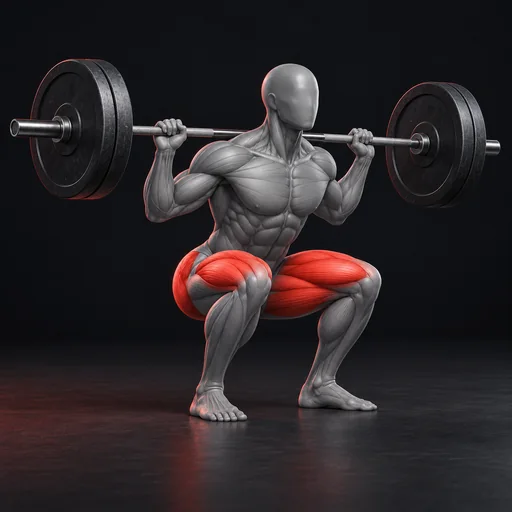
Back Squat is a strength – resistance exercise exercise involving Quadriceps, Gluteus maximus. Use these steps to learn the movement and work with your coach to choose a suitable level.
Last updated: · DynPerformance
- Primary muscles
- Quadriceps, Gluteus maximus
- Secondary muscles
- Adductor magnus, Erector spinae, Abdominals
- Exercise type
- Strength – resistance exercise
Exercise technique
- Rack
Set the bar slightly below shoulder height.
- Position
Rest the bar on your upper-back muscles, not your neck.
- Unrack
Stand up beneath the bar with both feet planted, then take short steps back.
- Prepare
Place your feet around shoulder-width apart and brace your trunk all around.
- Squat
Bend your hips and knees together to lower between your feet.
- Bottom
Reverse at a depth where you can maintain foot contact and lower-back position.
- Rise
Push through your midfoot and raise your hips and shoulders together.
Key technique points
- Keep the bar over your midfoot.
- Track your knees in the direction of your toes.
- Maintain heel contact.
- Position your elbows to secure the bar.
- Change direction without bouncing at the bottom.
- Face the rack and check contact with both hooks when reracking.
Common mistakes
Placing the bar on the neck
Pressing the bar into the bony prominence of your neck takes the load off the supporting muscle shelf.
Knees caving inward
Misalignment between your knees and feet reduces load control.
Heels lifting
Shifting pressure forward reduces your base of support.
Hips rising early
Leaving your chest behind turns the movement into a forward bend.
Rounding to gain depth
Losing lower-back position reduces control of the descent.
Backing into the rack
Approaching without seeing the hooks makes incorrect bar placement more likely.
Frequently asked questions
Back Squat: why is “Placing the bar on the neck” a mistake?
Pressing the bar into the bony prominence of your neck takes the load off the supporting muscle shelf.
Back Squat: why is “Knees caving inward” a mistake?
Misalignment between your knees and feet reduces load control.
Back Squat: why is “Heels lifting” a mistake?
Shifting pressure forward reduces your base of support.
Back Squat: why is “Hips rising early” a mistake?
Leaving your chest behind turns the movement into a forward bend.
Back Squat: why is “Rounding to gain depth” a mistake?
Losing lower-back position reduces control of the descent.
Back Squat: why is “Backing into the rack” a mistake?
Approaching without seeing the hooks makes incorrect bar placement more likely.
What should I focus on when doing Back Squat?
Keep the bar over your midfoot. Track your knees in the direction of your toes. Maintain heel contact. Position your elbows to secure the bar. Change direction without bouncing at the bottom. Face the rack and check contact with both hooks when reracking.
Related exercises
- Air Bike
- Assisted Pistol Squat
- 45-degree Back Extension
- Banded Lateral Walk
- Barbell Hip Thrust
- Exercise Guide
Add this exercise to your program with your coach
If you have a health condition, consult a qualified professional.