High Knees
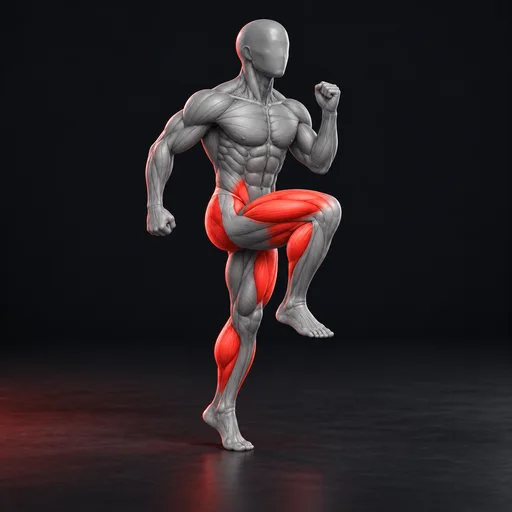
High Knees is a cardiovascular conditioning - running-in-place coordination exercise involving Hip flexors, Gastrocnemius. Use these steps to learn the movement and work with your coach to choose a suitable level.
Last updated: · DynPerformance
- Primary muscles
- Hip flexors, Gastrocnemius
- Secondary muscles
- Quadriceps, Core muscles
- Exercise type
- Cardiovascular conditioning - running-in-place coordination
Exercise technique
- Stance
Stand with your feet hip-width apart and your torso upright.
- First lift
Raise one knee comfortably toward hip height.
- Support
Make brief, soft contact with the floor through the other foot.
- Arm coordination
Bring forward the arm opposite your raised knee.
- Switch
Run in place, raising the other leg as you lower your knee.
- Pelvis
Keep your hips beneath your torso without arching your lower back.
- Tempo
Breathe at a rhythm that allows you to maintain knee height and torso position.
Key technique points
- Choose knee height according to torso control.
- Coordinate opposite arms and legs.
- Keep floor contacts brief and quiet.
- Do not lean backward.
- Land your foot beneath your body.
- Keep your shoulders relaxed.
Common mistakes
Leaning backward
Do not move your torso backward to raise your knee.
Folding forward
Do not artificially increase knee height by bringing your chest toward your knee.
Landing heavily
Do not strike the floor with your heel at every change of foot.
Spreading the arms
Do not seek balance by flailing your arms instead of using a running rhythm.
Pulling the knee across
Do not rotate your leg inward across the front of your body on each lift.
Accelerating without control
Do not increase the rhythm once knee height and pelvic control deteriorate.
Frequently asked questions
High Knees: why is “Leaning backward” a mistake?
Do not move your torso backward to raise your knee.
High Knees: why is “Folding forward” a mistake?
Do not artificially increase knee height by bringing your chest toward your knee.
High Knees: why is “Landing heavily” a mistake?
Do not strike the floor with your heel at every change of foot.
High Knees: why is “Spreading the arms” a mistake?
Do not seek balance by flailing your arms instead of using a running rhythm.
High Knees: why is “Pulling the knee across” a mistake?
Do not rotate your leg inward across the front of your body on each lift.
High Knees: why is “Accelerating without control” a mistake?
Do not increase the rhythm once knee height and pelvic control deteriorate.
What should I focus on when doing High Knees?
Choose knee height according to torso control. Coordinate opposite arms and legs. Keep floor contacts brief and quiet. Do not lean backward. Land your foot beneath your body. Keep your shoulders relaxed.
Related exercises
- Knee-to-wall Ankle Mobilization
- Box Jump
- Dumbbell Standing Calf Raise
- Ankle Circles
- Calf Press On The Leg Press Machine
- Exercise Guide
Add this exercise to your program with your coach
If you have a health condition, consult a qualified professional.