Rope Jump
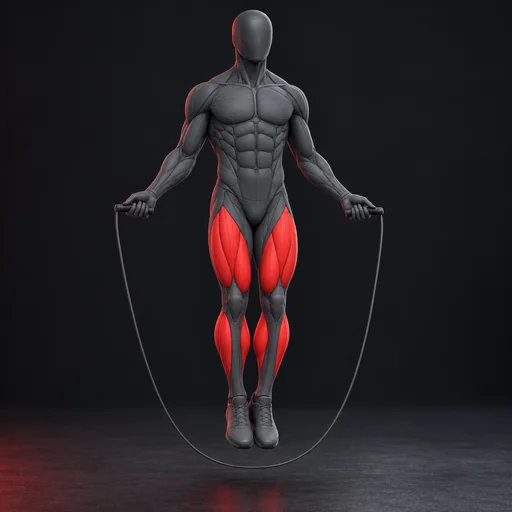
Rope Jump is a cardiovascular conditioning – plyometrics / coordination exercise involving Gastrocnemius, Soleus. Use these steps to learn the movement and work with your coach to choose a suitable level.
Last updated: · DynPerformance
- Primary muscles
- Gastrocnemius, Soleus
- Secondary muscles
- Quadriceps, Hamstring, Gluteus maximus, Tibialis anterior, Deltoid, Forearm muscles, Core muscles
- Exercise type
- Cardiovascular conditioning – plyometrics / coordination
Exercise technique
- Starting position
Place the rope handles in your palms.
- Stance
Keep your feet close together, bend your knees slightly and look forward.
- Rope control
Keep your elbows close to your torso and your hands beside your hips.
- Rotation
Turn the rope with small wrist circles instead of broad shoulder circles.
- Jump
Make a short, simultaneous jump with both feet, only high enough for the rope to pass.
- Land
Land softly on the forefeet and bring your heels toward the floor.
- Torso control
Lightly brace your abdominals and keep your torso upright.
- Rhythm
Establish a steady pace with one jump for each rope revolution.
- Breathing
Breathe in time with your jumping rhythm without holding your breath.
Key technique points
- Minimize jump height.
- Turn the rope from your wrists.
- Keep your elbows close to your torso.
- Make your landings quiet.
- Look forward.
- Stop and restart if you lose rhythm.
- Keep your shoulders relaxed.
- Adjust rope length to your height.
Common mistakes
Jumping unnecessarily high
This unnecessarily increases energy use and mechanical loading on landing.
Turning the rope from the shoulders
Do not disrupt rhythm and rope path with large arm circles.
Spreading the elbows
Do not shorten the effective rope length and increase the chance of catching it.
Landing hard
Do not strike the ground without softening your knees and ankles.
Looking at the feet
Do not drop your head forward and lose your upright torso position.
Holding the breath
Do not block your breathing during continuous jumps.
Starting fast
Do not turn the rope faster than you can control before establishing a basic rhythm.
Frequently asked questions
Rope Jump: why is “Jumping unnecessarily high” a mistake?
This unnecessarily increases energy use and mechanical loading on landing.
Rope Jump: why is “Turning the rope from the shoulders” a mistake?
Do not disrupt rhythm and rope path with large arm circles.
Rope Jump: why is “Spreading the elbows” a mistake?
Do not shorten the effective rope length and increase the chance of catching it.
Rope Jump: why is “Landing hard” a mistake?
Do not strike the ground without softening your knees and ankles.
Rope Jump: why is “Looking at the feet” a mistake?
Do not drop your head forward and lose your upright torso position.
Rope Jump: why is “Holding the breath” a mistake?
Do not block your breathing during continuous jumps.
Rope Jump: why is “Starting fast” a mistake?
Do not turn the rope faster than you can control before establishing a basic rhythm.
What should I focus on when doing Rope Jump?
Minimize jump height. Turn the rope from your wrists. Keep your elbows close to your torso. Make your landings quiet. Look forward. Stop and restart if you lose rhythm. Keep your shoulders relaxed. Adjust rope length to your height.
Related exercises
- Knee-to-wall Ankle Mobilization
- Bent-knee Calf Stretch
- Box Jump
- Dumbbell Standing Calf Raise
- Ankle Circles
- Exercise Guide
Add this exercise to your program with your coach
If you have a health condition, consult a qualified professional.